
Emergency Attic Insulation Near Me: What Boyle Heights Homeowners Should Do First
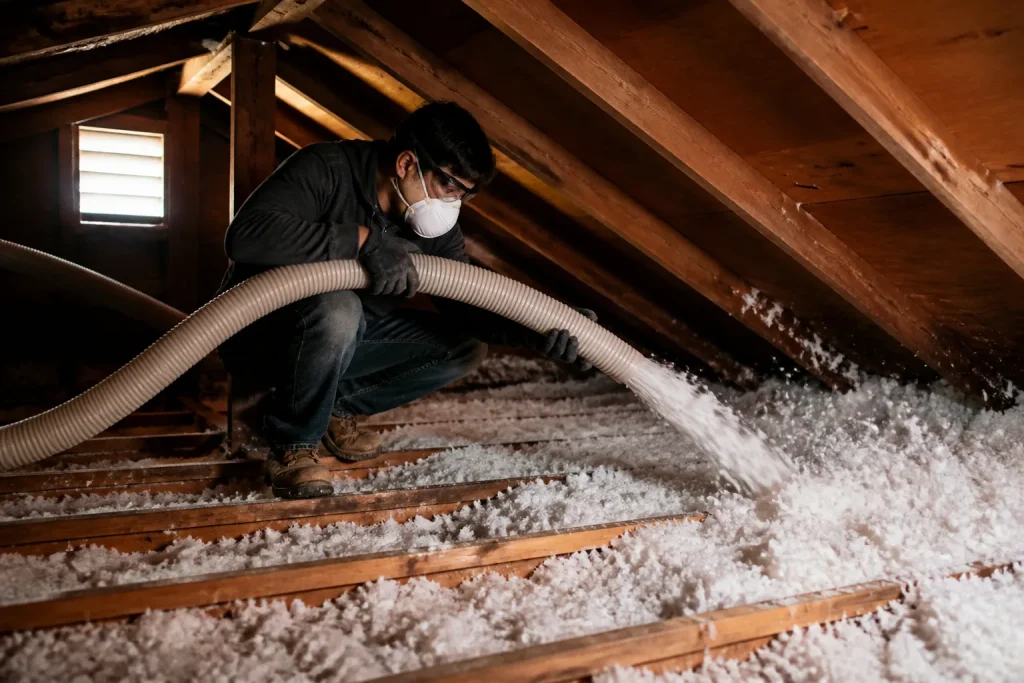
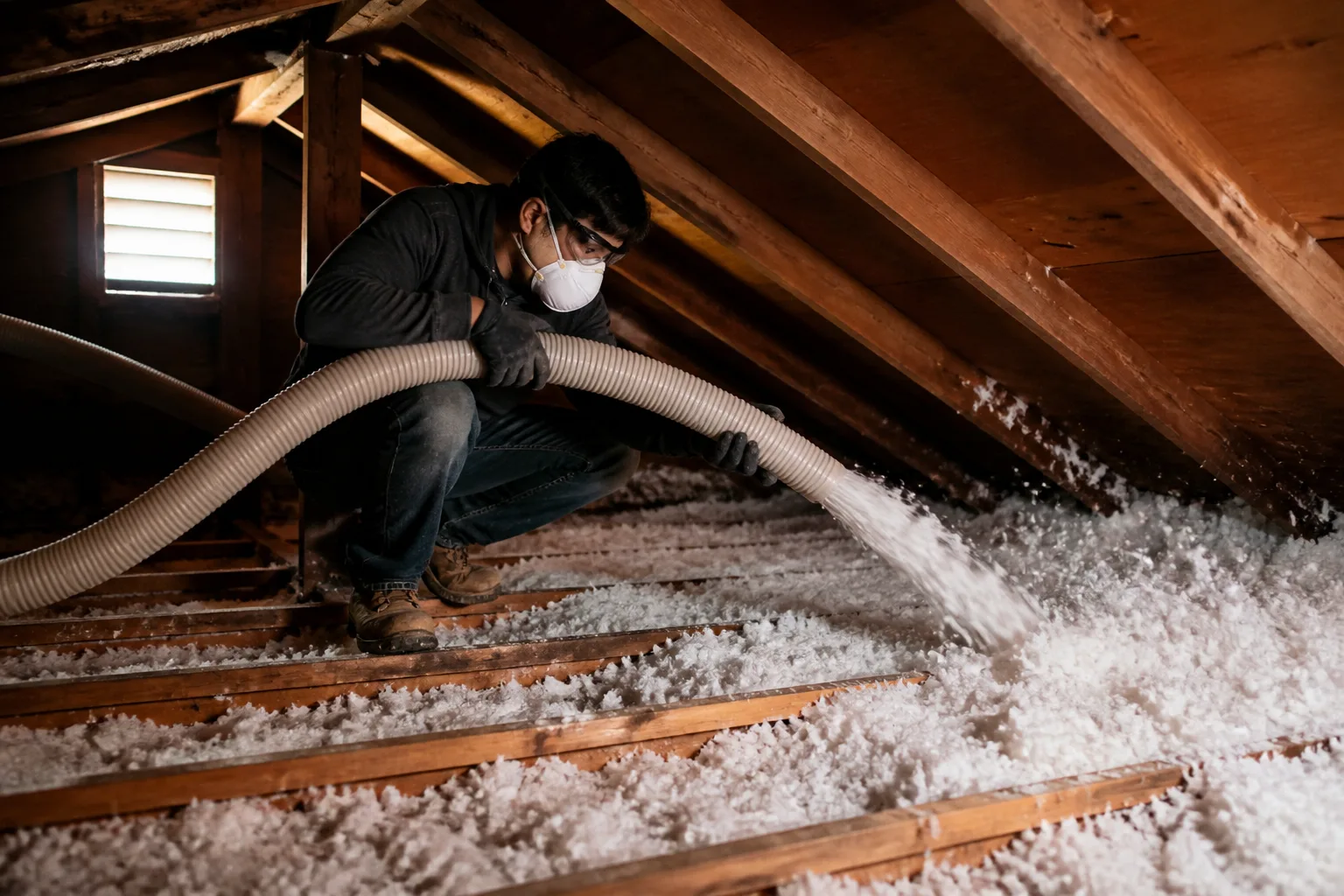
If you’re searching “emergency attic insulation near me” in Boyle Heights because water came through your roof or rodents tore through your blown-in material, here’s the straight answer: don’t install anything yet. Your first 48 hours should be about assessment, documentation, and moisture control. If you’d rather not DIY any part of this, call (855) 382-3938 and we’ll walk you through what we’re seeing over the phone before anyone sets foot in your attic.
The Most Expensive Mistake After Attic Damage
The costliest error we see after attic storm or water damage in Boyle Heights isn’t waiting too long to call a contractor. It’s calling one too fast and letting them blow new insulation over material that hasn’t dried. Trapped moisture sits against the roof deck, feeds mold, and rots sheathing from the inside out. By the time you notice the ceiling stain, you’re looking at a structural repair that costs ten times what the original insulation job would have.
We’ve seen this happen in older Boyle Heights homes around Hollenbeck Park and the flats near Soto Street, where attics have limited ventilation to begin with. The framing in many of these houses dates to the 1920s and 1930s. Old-growth lumber handles water better than modern pine, but nothing handles being sealed in with wet fiberglass for six months.
Before you call anyone, here’s the sequence that protects your home and your insurance claim.
Step 1: Assess From the Hatch, Not the Joists
The first rule of attic triage: do not walk the ceiling joists unless you can see the entire span and confirm the framing is dry and sound. Water-soaked ceiling drywall gives way without warning. If you’re not certain, stay on the ladder and use a bright flashlight.
From the hatch, look for these four things in Boyle Heights attics:
- Daylight through the roof deck. If you can see sky, you have an active opening. Tarp the roof from the outside now. Don’t wait for the next marine layer or a sudden winter storm.
- The color and texture of existing insulation. Wet fiberglass batts slump and clump. Wet blown-in cellulose mats down and feels cold to the touch. Dry material holds its loft.
- Droppings, nesting debris, or tunneling. Rodents shred insulation and leave visible trails. That’s a removal job, not a topping-off job.
- Black staining or dark streaks on the undersides of roof sheathing. This is moisture accumulation. Even if the insulation feels dry at the top, the deck above may be holding water against the material.
If you see sagging drywall, wide cracks in the ceiling below the hatch, or water beading on nails, close the hatch and call a structural inspector before you call an insulation contractor. We’ll say it plainly: no insulation job matters if the ceiling won’t hold it.
Step 2: Check Moisture Content Before Anyone Touches Material
An inexpensive pin-type moisture meter, about $30 at any hardware store, tells you more in five minutes than a visual inspection alone. Push the pins into the existing insulation and the roof sheathing above it. Here’s the threshold we use in the field:
- Below 15% moisture content: Material is dry enough to stay. You need a roof repair, not an insulation replacement.
- 15% to 20%: Borderline. The roof leak must be fixed first, then the insulation needs airflow and time before anyone sprays or blows over it.
- Above 20%: Remove the wet material. It will not dry in place reliably in a Boyle Heights attic, especially in summer when daytime attic temperatures hit 130 degrees but nighttime humidity from the LA basin creeps back into the space.
Anyone who quotes you insulation without checking moisture content is guessing. In our book, that’s not an estimate. That’s a sales pitch.
If your attic has soaked batts, know that fiberglass can often be dried in place if the leak is fixed and the attic has enough ventilation. But wet cellulose almost always compacts and loses its R-value for good. The material matters, which is exactly why we carry eight brands across fiberglass, mineral wool, and cellulose. A spec call like this one is where having options beats having a favorite.
Step 3: Rodent Damage Is a Biohazard Job First
If you see droppings, nesting material, or chewed insulation, stop thinking about R-value and start thinking about health. Contaminated blown-in insulation is a biohazard. Hantavirus, salmonella, and leptospirosis all travel through rodent waste. Blowing new material over contaminated cellulose doesn’t contain it. It just buries the problem under fresh insulation.
Here’s the order of operations we recommend for Boyle Heights homeowners dealing with rodents in the attic:
- Close up the entry points first. Roof rats in Boyle Heights get in through gaps at the eaves, uncapped vents, and old scuttle holes. If the entry isn’t sealed, removal is temporary.
- Schedule the biohazard removal. Contaminated material gets bagged and removed with protective equipment. This is not a job for a shop vac.
- Sanitize the attic floor and framing. The space needs treatment before any new material goes down.
- Then, and only then, install new insulation. This is the point where material choice matters. In older Boyle Heights homes with mixed construction, a vapor-open material like GreenFiber cellulose or Rockwool mineral wool often outperforms sealed foam, because the house needs to breathe in ways a newer build doesn’t.
LA County Vector Control covers rodent complaints, but they don’t remove contaminated insulation. That falls to a contractor with the right training and disposal protocol. When you call around, ask the company directly: “Do you handle biohazard removal in-house, or do I need a separate remediation crew first?” A straight answer to that question tells you who you’re dealing with.
Step 4: Document Everything Before Anyone Does Anything
Your homeowner’s insurance claim depends on evidence collected before work starts. Most Boyle Heights policies cover water damage to insulation if the cause was sudden and accidental: a storm-blown shingle, a fallen branch, a failed flashing. They’re less interested in slow leaks that went unnoticed for months.
Before calling any contractor, do this:
- Photograph the attic from the hatch in daylight. Wide shots of the affected area, close-ups of wet material, and images of the roof deck above the insulation.
- Photograph the ceiling below any attic damage. Even if the stain looks minor now, document it before it spreads.
- Photograph the exterior roof damage. Missing shingles, lifted flashing, debris impact.
- Log every conversation. Names, dates, what was said, what was quoted. Insurance adjusters respond better to a paper trail than to memory.
- Don’t remove anything until the adjuster has seen it or you have written confirmation. If you must remove wet material for safety, save a sample bagged and labeled.
One note on Boyle Heights specifically: many homes here predate modern roof decking standards. If your adjuster balks at the cost of insulation replacement on a 1930s bungalow, remember that the material in the attic today is almost certainly not original. Someone added it later, and paying to replace it after a covered event is not unreasonable.
Step 5: Calling at 8pm? Here’s How to Separate a Real Emergency Contractor From a Storm-Chaser
After a major wind event or winter storm, your phone fills up with contractors who suddenly specialize in emergency work. Some are legitimate. Some are out-of-state crews working out of a rental van. Here’s how to tell the difference when you’re calling at 8pm after water is dripping through your ceiling:
- Ask what they’re going to do first. A real emergency responder says “assess moisture, document damage, and make the space safe.” A storm-chaser says “we’ve got a crew in your area tomorrow, sign now for 10% off.”
- Ask what insulation brands they install. A company with manufacturer authorizations can name them. We’re authorized to install from eight manufacturers, including Owens Corning, Johns Manville, Knauf, and Rockwool. A storm-chaser says “whatever you want” or names one brand they picked up at a big-box store.
- Ask if insulation is all they do. If they’re also offering roof repair, gutters, and driveway sealcoating in the same call, they’re not a specialist. Insulation is all we do, so every estimator and installer lives in the details of building envelope science.
- Ask how they measure moisture. No answer or a vague “we can tell by looking” is a red flag. The answer should include a meter and specific numbers.
We pulled one out of a garage conversion over by Evergreen Cemetery last winter where a homeowner had paid a traveling crew to blow fiberglass over soaked batts. Three months later, the ceiling drywall buckled and the smell told the whole story. The cleanup cost more than the original insulation job plus the roof repair combined. That’s the call we’d rather take at midnight than the one we get after someone else’s shortcut.
When to Call a Pro
You can handle the hatch assessment, the moisture meter reading, and the documentation. You should not handle the removal of waterlogged or rodent-contaminated material, and you should never open up a ceiling or cut into a roof deck without training. If any of the following apply, call (855) 382-3938 before doing anything else:
- You see sagging drywall or water staining that appears to be growing.
- You smell musty odors that persist after the roof is tarped.
- You find rodent droppings anywhere in the attic.
- Your moisture meter reads above 20% anywhere in the material.
- You simply don’t want to climb the ladder. That’s fine too.
Related services in Boyle Heights: Attic Insulation in Boyle Heights, Spray Foam Insulation in Boyle Heights, and Blown In Insulation in Boyle Heights. The right method depends on what happened to your attic, not on what a contractor happens to sell.
The Bottom Line
The first 48 hours after attic damage in Boyle Heights should look like this: assess from the hatch, measure moisture, document everything, then call a contractor who asks about your specific situation before quoting anything. Never let anyone install new insulation over wet or contaminated material. That shortcut turns a repair into a remediation.
If you’re in Boyle Heights and need help, Heartland Insulation Co offers free estimates. We carry eight brands across three installation methods so the material matches the job, not the other way around. Call (855) 382-3938 and tell us what you saw from the hatch. We’ll tell you what to do next.
Frequently Asked Questions
Act within 24 to 48 hours. The first priority is stopping the water with a tarp, then measuring moisture content in the insulation. Material that stays above 20% moisture for more than a few days develops mold and compresses permanently. Call (855) 382-3938 for guidance on your specific situation.
Fiberglass batts can sometimes dry in place if the leak is fixed and ventilation is adequate. Wet blown-in cellulose rarely recovers because it mats down and loses loft. The only way to know is with a moisture meter reading. If you need a professional assessment, estimates are free.
Most policies cover insulation replacement when the damage was sudden and accidental, like storm-driven water or a fallen branch. Document everything with photos before any work begins. Slow leaks that ran unnoticed are typically harder to claim, which is why prompt attic inspection matters.
Cost depends on attic size, material type, and whether removal of wet or contaminated material is required. A small attic with simple removal runs on the lower end; a full remediation with biohazard cleanup runs higher. Call (855) 382-3938 for an exact quote, we’ll walk you through the variables before anyone comes out.
Written by the team at Heartland Insulation Co, serving Boyle Heights since 2016.
Need Insulation Help?
Call Heartland Insulation Co — licensed & insured, here with fast after-hours help in Boyle Heights.
(855) 382-3938