
Fast, Reliable Attic Insulation Across San Marino
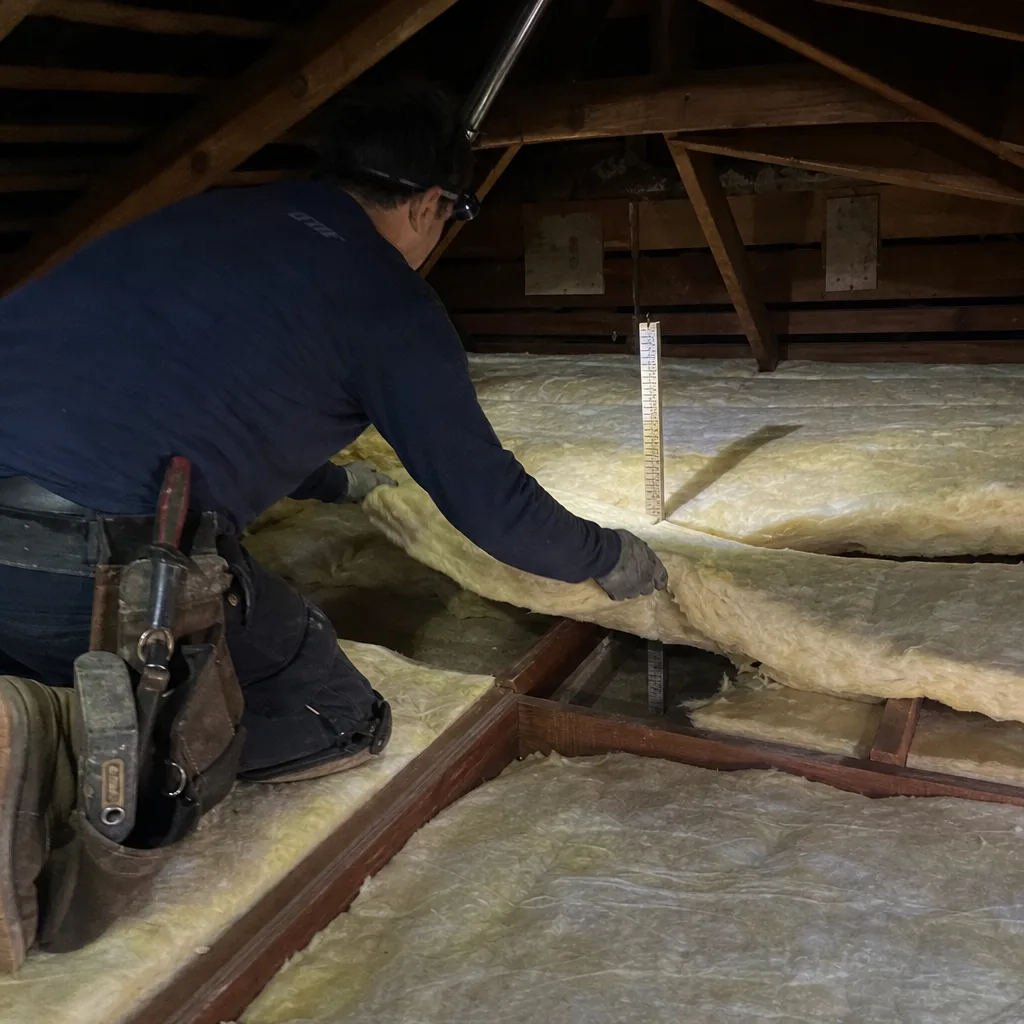
Attic insulation in San Marino typically costs $1,800 to $6,500 depending on attic size, access difficulty, and which of the three installation methods fits your home’s construction. Most San Marino homes built between 1920 and 1950 have little or no attic insulation by today’s standards, and we’re familiar with the structural quirks of these estates. Our crew responds to San Marino calls within 24 to 48 hours for estimates, and we stock materials suited to historic lath-and-plaster construction. Call (855) 382-3938 to schedule a walkthrough.
Why Heartland Insulation Co Is San Marino’s Preferred Attic Insulation Company
San Marino homeowners call us because we understand what’s behind those plaster walls and under those clay-tile roofs. Ruben Montoya, our owner, has walked attics across the 91108 and 91118 zip codes, from the estates off Lombardy Road to the Colonial Revivals near Lacy Park. We know where knob-and-tube wiring hides, which attics have balloon framing with no fire blocking, and why a radiant barrier under a clay-tile roof needs different installation than under asphalt shingles.
San Marino customers mention our diagnostic approach in reviews. We don’t arrive with a product to sell. We spec the job before we sell the product. That matters here, where the wrong material against an original plaster ceiling can trap moisture, and the wrong air-sealing detail can turn a beautiful 1920s attic into a code violation. Single-trade focus matters too. Insulation is all we do, so we do it right. No HVAC add-on, no roofing upsell. Just the building envelope, done correctly for the specific house.
Attic Ventilation in San Marino
Attic Ventilation in San Marino is a corrective upgrade more than a standalone project, because the large attic volumes of 1920s estates rarely have enough airflow for modern insulation levels. San Marino’s hot-summer Mediterranean climate pushes attic temperatures past 150°F from June through September, and without proper intake and exhaust, that heat radiates into living spaces and accelerates deterioration of original wood framing. A typical attic ventilation upgrade in San Marino runs $800 to $2,200, depending on roof configuration and the number of vents needed.
Historic Roof Geometry
Many San Marino estates have complex roof lines with dormers, hips, and deep eaves that original builders never expected to insulate. Ventilation must be planned around clay-tile ridges and custom copper flashing, not just stapled in. We coordinate with roofers who understand historic tile systems before cutting any openings.
Clay-Tile Roof Compatibility
Improper vent installation under clay tile creates entry points for water and nesting rodents. On a 1920s Spanish Colonial near the Huntington, standard off-the-shelf vents often don’t fit the tile profile. We use low-profile vents that sit flush under the tile line and preserve the roofline’s original appearance while delivering the airflow the attic actually needs.
Radiant Barrier in San Marino
Radiant Barrier installation in San Marino is one of the highest-ROI attic upgrades for cooling-season comfort, given the city’s long, dry, intensely sunny summers. A radiant barrier in a San Marino attic typically costs $900 to $2,800 installed, reflecting radiant heat before it penetrates the insulation below. Combined with proper blown-in insulation, a radiant barrier can cut attic temperatures by 20 to 30 degrees during peak summer afternoons.
Under Historic Clay Tile
Radiant barrier under clay tile requires careful fastener selection and air-gap detailing. Clay tile absorbs and radiates heat differently than asphalt shingles, and a barrier installed tight against the roof deck traps moisture against original 1920s framing. We’ve seen wood rot from exactly that mistake. Our method leaves the thermal break intact without creating a condensation surface.
Knee-Wall Attics
Several San Marino estates have finished attic spaces with knee walls, common in larger homes with dormered second stories. Radiant barrier on the sloped ceiling planes behind those knee walls keeps conditioned air from bleeding out through the roofline. The work is finicky because access is tight, but the comfort difference in upstairs bedrooms is immediate.

Trusted Brands We Service in San Marino
We carry Johns Manville, Knauf, Rockwool, and CertainTeed among our eight product lines, and we match the brand to the job rather than forcing one system onto every San Marino attic. Johns Manville blown-in fiberglass is our go-to for topping up existing insulation in accessible attics. Knauf batts work well for odd joist spacing in older framing. Rockwool mineral wool is the right call for San Marino homeowners who want fire resistance and sound dampening, especially on lots where homes sit close together. CertainTeed offers high-performance batt systems that fit tight attic spaces in Mediterranean-style homes. Because we’re authorized across all these lines, parts and materials for San Marino jobs arrive faster than they would through a single-brand contractor.
Common Attic Insulation Problems We See in San Marino Homes
- Insulation packed over live knob-and-tube wiring. This is the most serious issue we find east of Huntington Drive. Pre-1940 wiring gets buried under old fiberglass, and we’ve seen heat-damaged insulation where the wiring runs against wood framing. Any blown-in work must be preceded by wiring assessment and, usually, rewiring coordination with a licensed electrician.
- No air sealing at top plates and penetrations. San Marino’s brick and stucco exteriors hide unsealed framing cavities. Warm air moves through interior wall cavities into the attic all winter, and the only fix is air-sealing before insulation goes down. Skipping this step leaves you paying to condition attic air through a mild San Marino winter.
- Radiant barrier installed wrong under clay tile. We’ve corrected installations where the barrier was stapled directly to the roof deck with no air gap. Moisture trapped against original 1920s framing causes rot. This is a specific failure mode of San Marino’s tile-roofed housing stock.
- Insufficient ventilation in large attic volumes. Estate homes simply have more cubic feet of attic than a standard 1950s ranch. A single gable vent doesn’t move enough air for an attic that might span 3,000 square feet. Static intake vents under the eaves, paired with ridge or box vents, are almost always needed.
Pricing for Attic Insulation in San Marino, CA
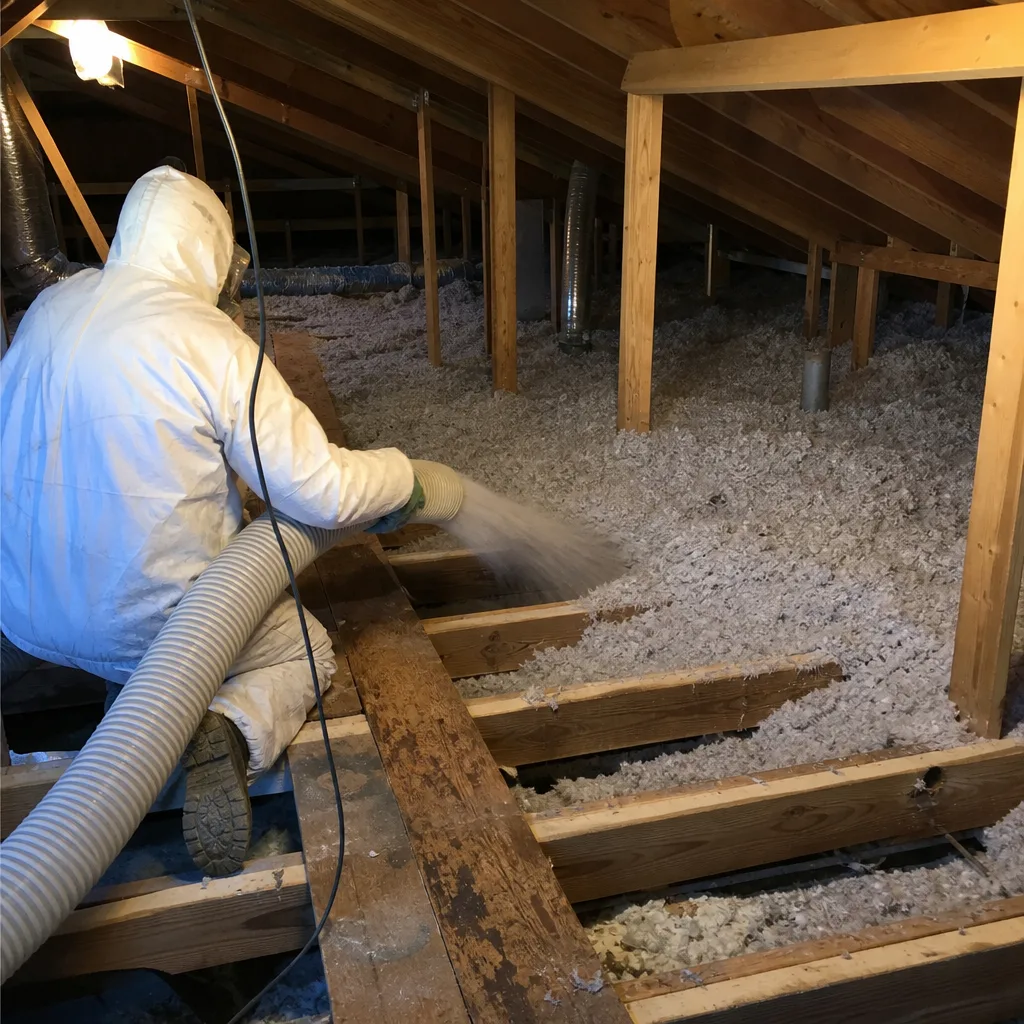
Blown-in attic insulation in San Marino runs $1,800 to $4,200 for a typical 1,500 to 2,500 square foot attic, including air sealing. Attic batt insulation runs $2,200 to $5,500, with higher costs where access is restricted or existing insulation must be removed first. Attic insulation top-up, where livable R-value exists but is below current code, runs $900 to $1,800. Attic insulation replacement, including removal of old material, runs $3,000 to $6,500. Attic baffles and ventilation prep add $400 to $1,200 depending on roof geometry. Every estimate from Ruben starts with a free walkthrough. Call (855) 382-3938 and we’ll give you a written number before any work begins.
We Also Serve Cities Near San Marino
Beyond San Marino, our crews cover San Gabriel, East San Gabriel, Alhambra, and South Pasadena with the same insulation-only focus. If you’re in one of those cities and dealing with a hot upstairs or attic wiring issues, our Attic Insulation team can be there within the same week. Call us and we’ll confirm the next available estimate slot.
Serving San Marino, CA — Our Local Coverage Area
We’re based in the San Marino area and know this community well. Use the map below to see our service coverage — if you’re nearby, we can almost certainly help.
FAQs About Attic Insulation in San Marino
No. We will not blow insulation over live knob-and-tube wiring. This is a fire hazard and a code violation under current Title 24 standards. The wiring must first be assessed by a licensed electrician, decommissioned or rerouted, and then we can proceed with air-sealing and insulation. We coordinate with electricians who work regularly on San Marino estates so the process doesn’t stall. Call (855) 382-3938 and we’ll walk you through the sequence.
We treat every San Marino estate as a historic restoration. Crews lay floor protection from the entry point to the attic access, avoid load paths over plaster ceilings, and use hand tools rather than heavy equipment near crown molding and custom millwork. When we recently insulated a 1925 Mediterranean estate on Oak Knoll Avenue, we coordinated with an electrician to reroute buried knob-and-tube wiring, air-sealed the top plates, installed Owens Corning blown-in fiberglass to R-49, and added a radiant barrier. The homeowner reported a 30% drop in summer cooling costs.
We recommend R-49 for attic floors in San Marino, which is above current California code minimums. The reason is simple: attic temperatures here routinely exceed 150°F from June through September, and R-38 doesn’t provide enough thermal break to prevent that heat from radiating into living spaces. For attics with original plaster ceilings and no air barrier, R-49 plus air-sealing and a radiant barrier is the combination we spec most often.
Yes, but we install them correctly. The barrier must be attached with an air gap between the barrier and the roof deck, and fasteners must be chosen for the tile profile. A tight installation traps condensation against original 1920s framing and causes rot. We’ve corrected that mistake on several San Marino homes. The difference is knowing how clay tile behaves compared to asphalt shingles and planning the installation accordingly.
Smart thermostats and zoned systems rely on stable indoor temperatures to operate efficiently. When attic insulation is inadequate, the upstairs zone runs constantly because heat radiates through the ceiling plane, causing the smart system to overcorrect. Proper insulation and a radiant barrier reduce the thermal load, so the HVAC system stops fighting the attic and the smart-home controls actually save energy. The 30% cooling-cost reduction our Oak Knoll client reported came from that combination.
If you’re ready to get an honest assessment of what your San Marino attic actually needs, call (855) 382-3938. Ruben will walk the attic with you, explain what he sees, and give you a written estimate the same day. Free estimates, no pressure, just straight answers about your home’s building envelope.
Written by Ruben Montoya, Owner at Heartland Insulation Co, serving San Marino and the San Gabriel Valley.