Fast, Reliable Attic Insulation Across Huntington Park
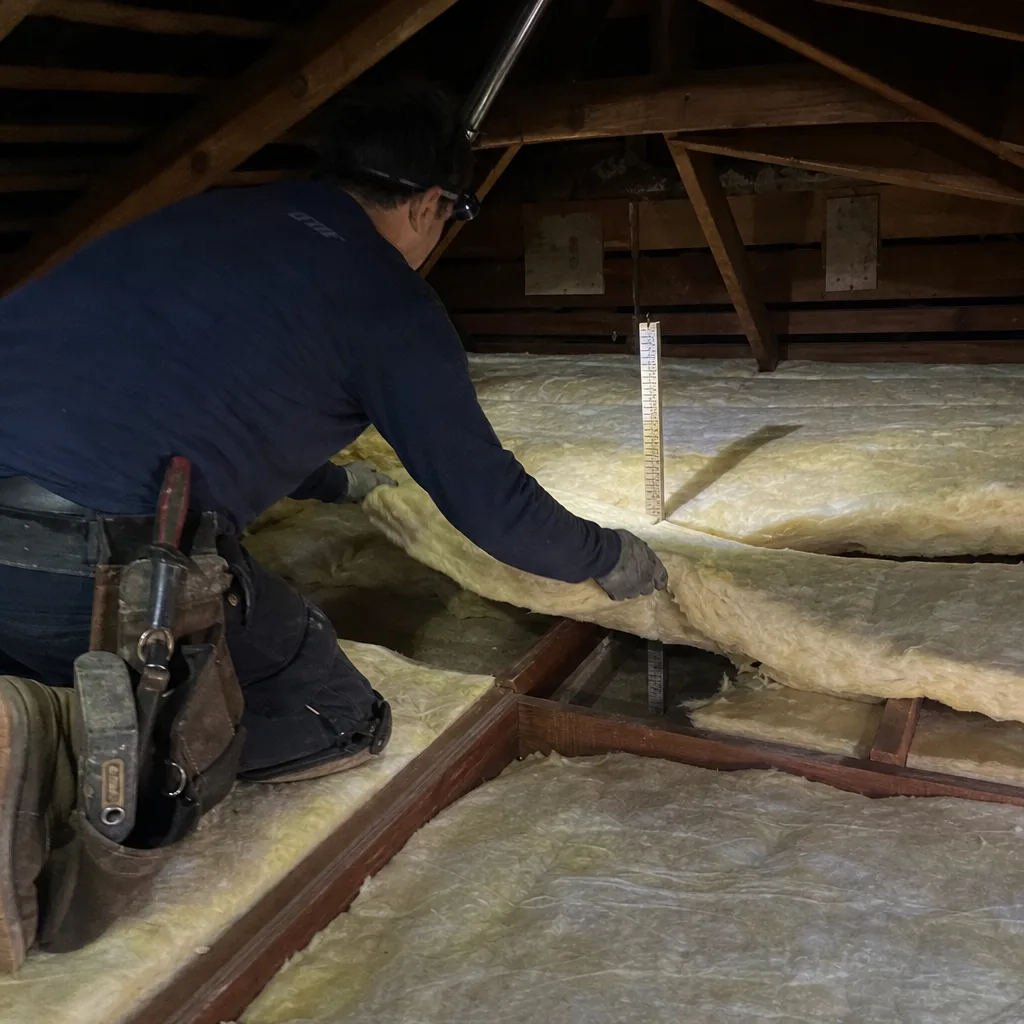
Attic insulation in Huntington Park is a retrofit job, not a new-build add-on. The homes here, mostly 1920s through 1950s stucco bungalows and courtyard apartments, were built before modern insulation standards existed, which means most attics are under-insulated, under-ventilated, and leaking conditioned air straight through the ceiling. Our crews work Huntington Park streets weekly, from the blocks off Pacific Boulevard to the residential grid south of Gage Avenue, and we’ve learned exactly what these old attics throw at you. If you’re tired of rooms that won’t cool down in August or dust settling on every surface within days of cleaning, call (855) 382-3938 and we’ll schedule a walkthrough.
Why Heartland Insulation Co Is Huntington Park’s Preferred Attic Insulation Company
We’re an insulation-only contractor, which matters more than it sounds like it should. Every estimator and installer on our team does nothing but insulation work, day in and day out, and in a city like Huntington Park where the housing stock demands product-agnostic diagnosis rather than a one-size-fits-all pitch, that single-trade focus is the difference between a real fix and a band-aid. Ruben Montoya runs our crews with a simple rule: spec the job before we sell the product. That means we look at your attic’s depth, wiring condition, venting, and access before we recommend anything.
Huntington Park homeowners call us because we carry eight brands and three installation methods, so the recommendation comes from the building’s actual needs, not from whatever happens to be on the truck. Rockwool for fire resistance and noise dampening, GreenFiber cellulose for older mixed-construction homes with irregular cavities, Johns Manville and Knauf batts for standard attic floors, CertainTeed where performance and warranty expectations run high. Our Huntington Park customers consistently mention the same thing after we finish: the attic finally feels like a controlled space instead of an oven with a hatch.
We answer calls same day, and we can usually have a crew in Huntington Park within 24 to 48 hours for estimates. Emergencies, like a failed radiant barrier or a hatch that’s lost its air seal, get priority scheduling because we know some problems can’t wait a week.
Attic Ventilation in Huntington Park
Attic Ventilation in Huntington Park is the single most overlooked retrofit on pre-1960 homes, and it’s where we start almost every diagnosis. Most of the bungalows and courtyard units here were built with gable-end vents or nothing at all, and a low-pitch tar-and-gravel roof traps heat in a way that bakes whatever insulation exists below it. Without proper airflow, attic temperatures climb past 140°F on summer afternoons, cooked air radiates into living spaces, and blown-in insulation slowly loses effective R-value. A typical attic ventilation job in Huntington Park, adding ridge or box vents plus baffles to keep airflow moving, runs $450 to $1,100 depending on roof configuration and attic size.
When Ventilation Is the Priority
If your upstairs rooms run 8 to 12 degrees hotter than the rest of the house on days when the marine layer burns off early, the problem is usually ventilation before it’s insulation. We see this constantly in homes along Seville Avenue and Rita Avenue where west-facing roofs get direct afternoon sun. Fixing airflow first means whatever insulation you install afterward actually performs.
Corrosion-Resistant Vents for Salt Air
Standard galvanized roof vents degrade fast in Huntington Park’s salt-laden air. We spec stainless or epoxy-coated vents for every job here, because replacing a corroded vent in five years is money you shouldn’t have to spend twice. The coastal influence in this part of the LA Basin is real and it eats fasteners.
Radiant Barrier in Huntington Park
Radiant Barrier in Huntington Park works differently than it does inland, and not always in the way homeowners expect. A radiant barrier reflects radiant heat away from the attic floor, which cuts heat gain through the ceiling by a measurable margin on hot sunny days. But Huntington Park’s marine layer creates a specific failure mode: the salt air corrodes staples, seam tape, and foil edges, causing the barrier to delaminate and sag away from the roof deck. Once that happens, the barrier becomes a dust trap instead of a reflector. Radiant barrier installation in Huntington Park typically runs $1,200 to $2,800 for a standard bungalow attic, and we always pair it with ventilation so the reflected heat has somewhere to go.
Delamination and Salt Air
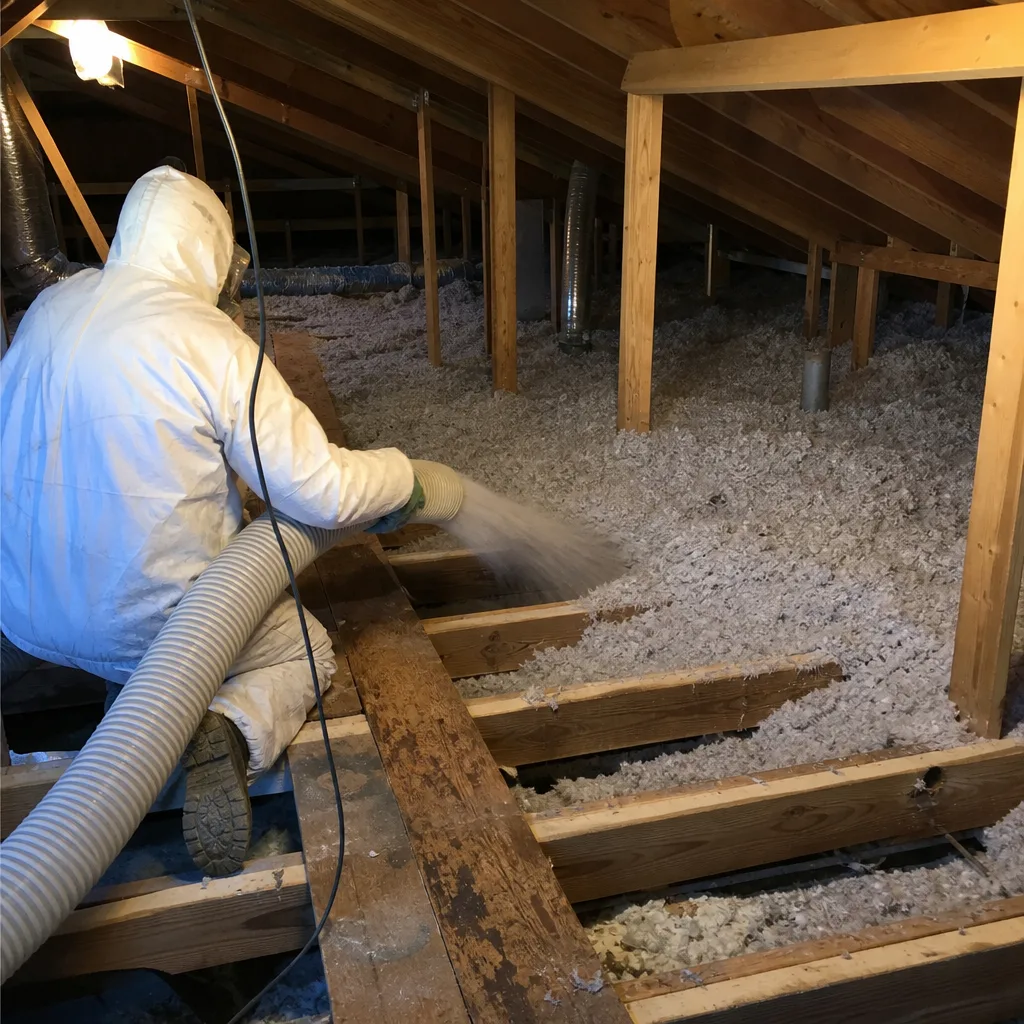
On a 1940s stucco bungalow off Florence Avenue near the 710, our crew found the original radiant barrier foil delaminating from salt-air exposure. The staples had corroded through, the seam tape had turned brittle, and the foil was hanging in sheets. We removed the failed material, added a corrosion-resistant ridge vent, and blew GreenFiber cellulose to R-38 over the attic floor instead.

When Radiant Barrier Makes Sense Here
Radiant barrier is a good fit for Huntington Park homes with accessible attic cavities and low-pitch roofs that take direct sun. It’s less effective on flat-roof apartment conversions where the cavity is too shallow to create the air gap a radiant barrier needs. We’ll tell you straight if it’s worth it in your specific attic.
Trusted Brands We Service in Huntington Park
We’re authorized to install Johns Manville, Knauf, Rockwool, and CertainTeed products, among the eight brands we carry, and we keep Huntington Park-specific stock on hand for faster turnaround. Rockwool batts with fire-resistant properties show up on a lot of our Huntington Park jobs, particularly in the tightly packed multi-unit buildings where fire separation matters. Knauf and Johns Manville insulation covers a lot of standard attic floors, and CertainTeed comes out when homeowners want the strongest manufacturer warranty. Because Attic Insulation is all we do, we’re not pushing one brand to protect a margin; the product follows the diagnosis.
Common Attic Insulation Problems We See in Huntington Park Homes
- Corroded attic hatch weatherstripping. The salt-laden marine air that drifts in from the coast, combined with the dust kicked up by Alameda Corridor freight traffic, eats away hatch seals within a few years. Once that seal goes, hot dusty air infiltrates the living space and the attic becomes a leak point all year round.
- Delaminated radiant barrier foil. Salt air corrodes the staples and seam tape holding foil to the rafters. The foil sags, tears, and stops reflecting heat, which means the piece of retrofit you paid for stops doing its job without any visible sign from below.
- Settled blown-in fiber over knob-and-tube wiring. Many Huntington Park attics still have active knob-and-tube circuits, and blown-in fiber settles unevenly around the wires and old duct wrap. That leaves high-heat pockets under low-pitch roofs that bake the remaining insulation and cut its effective R-value.
- No vapor barrier on flat or low-pitch tar-and-gravel roofs. These roofs heat up aggressively under afternoon sun, and without a vapor barrier or proper ventilation, moisture gets trapped at the insulation level. The result is compressed insulation that performs far below its rated R-value.
Pricing for Attic Insulation in Huntington Park, CA
A full attic insulation top-up in Huntington Park, where we blow additional material over existing settled fiber to bring it up to R-38 or R-49, typically runs $1,300 to $2,600. Attic insulation replacement, which includes removing old material, air-sealing penetrations, and installing new insulation, runs $2,800 to $5,500 for an average bungalow. Blown-in attic insulation alone lands at $1,100 to $2,400. Attic batt insulation for accessible attics runs $1,400 to $3,200. Attic baffles and ventilation prep work, which we recommend on nearly every Huntington Park job, adds $450 to $1,100. The variables are attic access difficulty, whether knob-and-tube wiring needs to be worked around, and how much old material has to come out. Estimates are free, and we’ll give you a firm number before any work starts. Call (855) 382-3938 to get yours.
We Also Serve Cities Near Huntington Park
Besides our regular work across Huntington Park, we run crews into Walnut Park, Bell, Cudahy, and Maywood several days a week. The housing stock is similar across all five cities, which means the problems are similar too, and we’re already familiar with the attics and access patterns in each one. If you’re just outside the city line, call us and we’ll confirm we can reach you.
Serving Huntington Park, CA — Our Local Coverage Area
We’re based in the Huntington Park area and know this community well. Use the map below to see our service coverage — if you’re nearby, we can almost certainly help.
FAQs About Attic Insulation in Huntington Park
Huntington Park’s marine-influenced air carries salt and moisture that inland cities like Downey or Whittier don’t get at the same concentration, and that salt air attacks attic hardware first. Staples, seam tape, hatch weatherstripping, and vent fasteners corrode years faster here, which breaks air seals and causes radiant barriers to delaminate. We replace failed hardware with stainless or epoxy-coated components as part of every Huntington Park insulation job to prevent this exact problem.
Yes, flat and low-pitch roofs in Huntington Park can be ventilated with low-profile box vents, edge venting, or mechanical attic fans depending on the attic depth and roof configuration. Shallow attics limit some options, but we’ve worked around those limits on dozens of 1920s-50s bungalows between Pacific and Alameda. Call (855) 382-3938 and we’ll assess what your roof cavity will actually support.
GreenFiber cellulose is our usual recommendation around knob-and-tube wiring because it settles tightly around irregular cavities and irregular obstructions, reducing air pockets that fiberglass batts leave behind. Rockwool mineral wool is another solid choice in Huntington Park because it’s non-combustible and won’t contribute to electrical fire risk. We do not recommend spray foam directly over knob-and-tube, and we’ll tell you if your wiring needs attention before any insulation goes in.
We bring compact equipment and vac-suited material hoses that feed through small closet scuttles and exterior hatchways without cutting open ceilings or walls. Our crews work these tight accesses weekly in Huntington Park, so we know how to move material through a 22-inch closet opening without tearing up the house. We’ll also replace the hatch seal while we’re up there, since that’s usually the first thing that’s failed.
Mostly the hardware, but failing hardware damages the insulation system as a whole. When radiant barrier staples corrode, the foil delaminates and stops reflecting heat. When hatch weatherstripping crumbles, the air seal breaks and hot dusty air infiltrates the home. The insulation material itself, whether fiberglass, mineral wool, or cellulose, holds up fine in Huntington Park’s environment as long as the components around it stay intact. Call (855) 382-3938 for an inspection if your attic hasn’t been opened in years.
Written by Ruben Montoya, Owner at Heartland Insulation Co, serving Huntington Park and the surrounding LA Basin.