
Fast, Reliable Spray Foam Insulation Across Florence-Graham
Spray foam insulation in Florence-Graham typically costs $1,800 to $5,600 for a full attic retrofit in one of the area’s 1920s-to-1950s bungalows, with wall cavity injection running $2,400 to $7,200 depending on square footage and access. Most jobs here are done same-week, not same-month. We’re based out of Boyle Heights, so our crews reach Florence-Graham in about 20 to 30 minutes, and we know the unincorporated county streets, the pier-and-beam foundations, and the way heat builds inside these older stucco homes. If you want someone who already understands your house before stepping into the attic, call (855) 382-3938 for a free estimate.
Why Heartland Insulation Co Is Florence-Graham’s Preferred Spray Foam Insulation Company
Florence-Graham isn’t a generic LA suburb. It’s an unincorporated pocket of Los Angeles County, which changes how insulation work gets permitted and inspected. That matters when you’re sealing open subfloor cavities or air-sealing a 1940s attic that was never built for modern energy codes. We’ve worked on homes along Florence Avenue, Hooper Avenue, and the residential blocks south of Gage. We know the housing stock here: original 2×4 walls, lath-and-plaster interiors, raised pier-and-beam floors, and rear additions built over decades without a thought given to ventilation or insulation. Ruben Montoya, who leads our estimating and field teams, has walked enough of these attics to know what’s behind the access panel before he opens it.
Our crews answer calls from Florence-Graham homeowners dealing with bedrooms that hit 90°F by three in the afternoon and gas bills that climb every winter. We show up when we say we will. We carry the right foam for the job, not just whatever is on the truck. And because we do insulation as our only trade, the person who sizes your job knows the difference between a rim joist that needs closed-cell foam and a wall cavity that can take open-cell. No crossover HVAC techs guessing at it.
Spray Foam Attic Insulation in Florence-Graham
Spray foam attic insulation in Florence-Graham means treating the attic as a conditioned space, not just a hot box over your ceiling. The payoff here is real: summers in this part of the LA Basin are long and hot, with attic temperatures regularly climbing past 140°F by early afternoon. That heat moves straight down through uninsulated ceilings into living space, especially in the one-story stucco bungalows that dominate the neighborhoods around 90001.
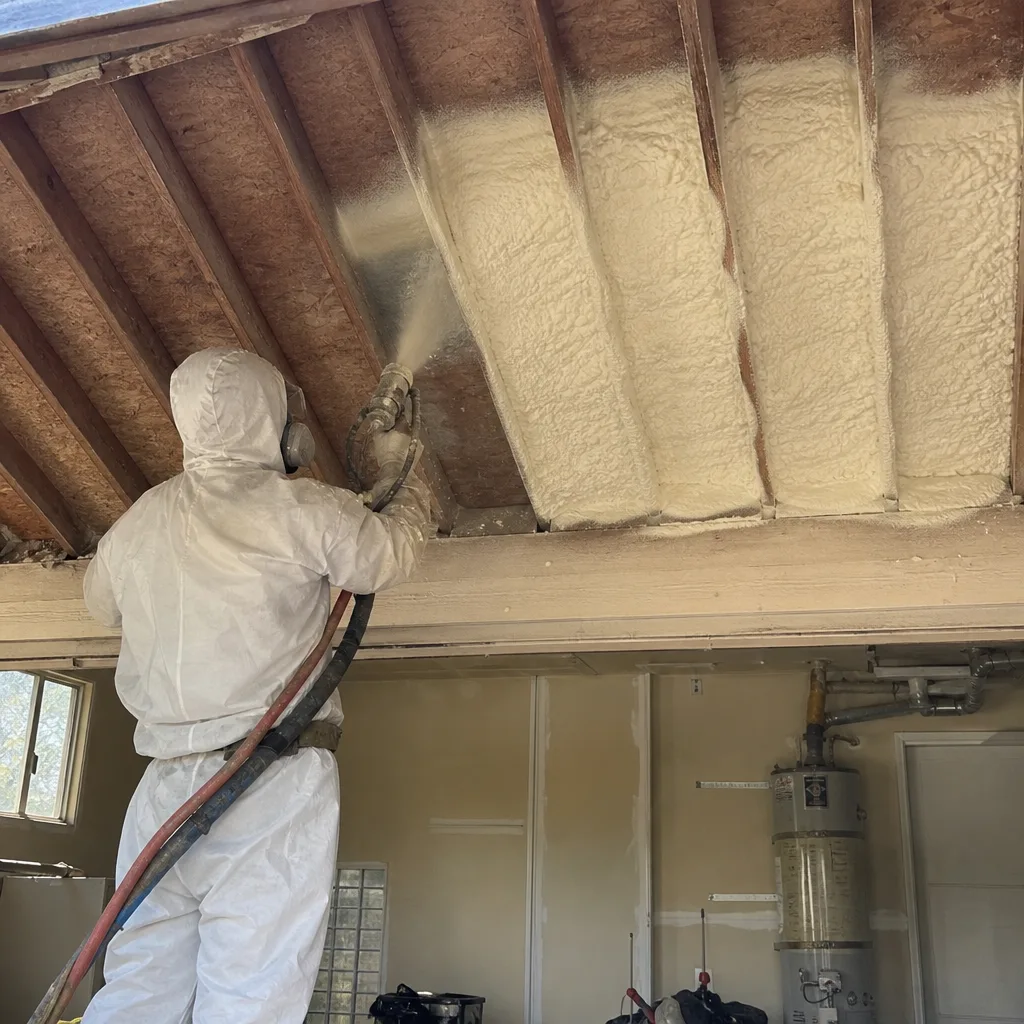
In a 1950s Florence-Graham home with an open attic and no existing insulation, we typically air-seal the top plates, chases, and any penetrations first, then apply open-cell spray foam to the underside of the roof deck. That brings the attic into the building envelope and drops the thermal gradient significantly. On homes where the attic vents are still functional and the roof deck is in decent condition, this works well. On properties where previous owners blocked vents with stored boxes or patio covers have trapped heat, we have to solve that ventilation problem before foam goes in.
For a typical 900 to 1,200 square foot attic in Florence-Graham, open-cell spray foam runs $2,800 to $5,200. Closed-cell, which we recommend on roofs with existing moisture concerns or very shallow rafter bays, adds roughly $300 to $600 per 100 square feet over open-cell pricing.
Air Sealing Before Foam Application
Foam does two jobs: it insulates and it seals air. On a Florence-Graham pier-and-beam home, the air-sealing part matters as much as the R-value. The original construction left gaps everywhere, where wires pass through top plates, around old recessed light cans, behind knee walls on the rare second story. We seal those before the main application. Skipping that step gives you foam over the same leaks, and the homeowner still feels drafts and heat creep.
Ventilation Corrections
Homes in the central Florence-Graham area often have blocked gable vents, buried soffit vents, or rear additions that have trapped attic air for decades. When attic temps read 150°F before noon, foam over those conditions turns the attic into an oven cavity that will bake the foam and off-gas. We’ve corrected enough of these to know it has to be handled before the county inspector will sign off. We add or restore ventilation paths, then apply foam. The order matters.
Spray Foam Wall Insulation in Florence-Graham
Spray foam wall insulation in Florence-Graham is the single best fix for original 2×4 wall cavities in these 1920s and 1930s stucco bungalows. Most houses here were built before wall insulation was standard practice in Los Angeles County. That means the walls are hollow. The stucco holds the afternoon sun, the wood framing transfers it inward, and the interior plaster gives it nowhere to go but into the room.
Closed-cell foam injected into those 3.5-inch deep cavities changes the wall from a heat sponge to a heat barrier. We typically drill from the exterior through the stucco at each stud bay, inject the foam under low pressure so it doesn’t blow out old lath and plaster, then patch and texture the injection holes to match. For homeowners who are already planning a stucco patch or exterior repaint, pairing the work saves time and money. Interior access is also possible, though it costs a bit more and involves patching drywall or plaster inside.
For a full exterior wall treatment on a 900 to 1,100 square foot Florence-Graham bungalow, closed-cell wall cavity injection runs $2,400 to $5,800 depending on how many exterior walls face west and south, where the heat load is worst. Partial treatments, like just the west-facing bedrooms where afternoon heat is unbearable, start around $1,400.

West- and South-Facing Wall Priorities
The blocks south of Florence Avenue and east of Hooper line up with west-facing rear walls that catch direct afternoon sun from about 2 PM until sunset. Those rooms cook. We see temperature differences of 15 to 20 degrees between west bedrooms and the north side of the same house in July. Foaming those specific walls first gives the fastest comfort return per dollar.
2×4 Cavity Foam Compatibility
Original 1920s framing in Florence-Graham is tight: true 2x4s, often irregularly spaced with 14 to 16 inch centers that drift. Closed-cell foam wants at least 3.5 inches of cavity depth to perform and won’t over-expand if applied correctly. We inspect stud spacing and plaster condition before drilling. If the lath is crumbling behind the stucco, we flag it. Injecting foam into a wall with failed plaster backing causes more harm than good, so we pull a small inspection hole and look before committing to the full wall.
Trusted Brands We Service in Florence-Graham
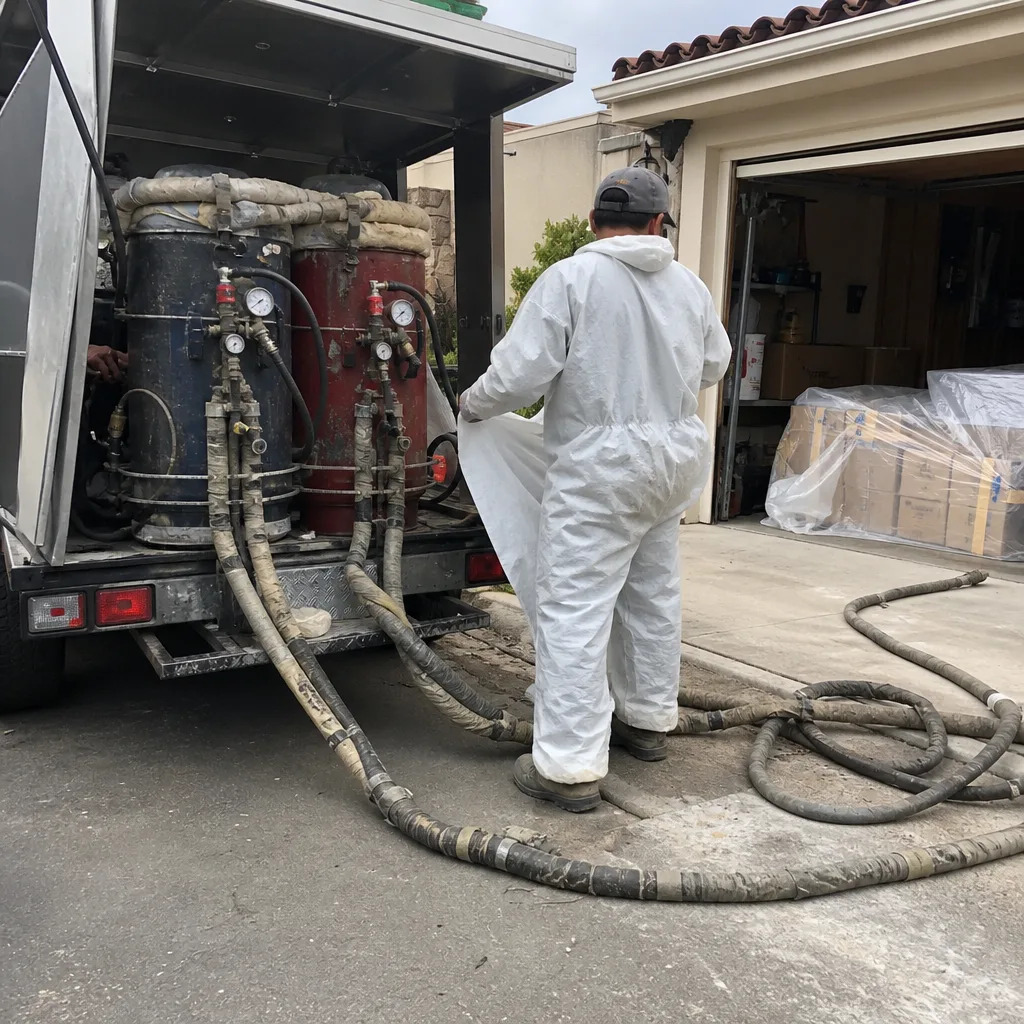
Heartland Insulation Co installs spray foam from manufacturers we trust for hot-climate performance: Icynene, Demilec, and CertainTeed. Icynene open-cell is a workhorse for attic envelopes in Florence-Graham’s long hot summers, and Demilec closed-cell gives us the R-value per inch these 2×4 walls need. CertainTeed rounds out the material options when a homeowner has a specific spec or warranty preference. We stock our trailers for the job we know we’ll find on these blocks, and we can pivot between products if a county inspector requires a specific fire rating or vapor profile on a mixed-construction addition. Ruben Montoya decides the material by what the building science calls for, not by what’s easiest to spray.
Common Spray Foam Insulation Problems We See in Florence-Graham Homes
- Blocked attic vents behind stored boxes. Rear attics and crawl spaces in Florence-Graham double as storage, and we’ve watched stored Christmas boxes and old furniture choke off gable vents completely. By noon, the attic hits 150°F plus. Foam applied over that heat load off-gasses and fails inspection, so we clear and correct ventilation before insulating.
- Unpermitted rear room additions with exposed wiring. The weekend-built additions behind Florence-Graham homes often have open splices, unprotected romex, and no insulation. Spray foam over exposed wiring is a serious fire hazard and county inspectors here will not pass it. We identify the electrical corrections needed and refuse to bury a fire risk in foam.
- Open pier-and-beam subfloor cavities sealed without wall fixes. Some contractors will foam under the floor and call it done, but on a Florence-Graham bungalow with uninsulated 2×4 walls, the summer heat just shifts upward through the west-facing walls. The foam under the floor helps, but without wall treatment, the house still radiates heat by late afternoon. We spec the whole envelope, not one surface.
- Patio covers trapping heat against attic vents. The metal and wood patio covers common in backyards along the 90001 blocks sit right under or beside roof vents. They block airflow and concentrate hot air under the eaves. In several Florence-Graham homes, we’ve had to add venting through the gable or install a solar attic fan before the foam could do its job.
Pricing for Spray Foam Insulation in Florence-Graham, CA
For a full attic spray foam retrofit in Florence-Graham, expect to pay between $2,800 and $5,200 for open-cell coverage across 900 to 1,200 square feet of roof deck. Closed-cell on the same attic runs $3,400 to $6,200. Wall cavity injection into original 2×4 walls runs $2,400 to $5,800 depending on how many exterior walls we treat, and subfloor sealing on a raised pier-and-beam foundation adds $1,200 to $1,800 per 1,000 square feet. These ranges reflect what homeowners in Florence-Graham actually paid on recent jobs, not national averages pulled from a website. Your exact number depends on attic access, wall condition, and whether county permit corrections are needed before we start. The estimate is free and Ruben or one of our estimators will walk your house with you before quoting anything. Call (855) 382-3938 for a specific number on your home, not a ballpark.
We Also Serve Cities Near Florence-Graham
Our crews based in Boyle Heights reach all of Florence-Graham quickly, and we regularly run jobs in the surrounding communities of Huntington Park, Walnut Park, South Gate, and Bell. Many of those neighborhoods share the same housing stock and unincorporated county quirks we see in Florence-Graham. If you’re a homeowner just over the border and dealing with the same 150°F attic and hollow 2×4 walls, the same team covers you. Our broader Spray Foam Insulation work spans the whole South LA corridor, and we bring the same approach to every job: find the real problem, spec the right product, and do the work once.
Serving Florence-Graham, CA — Our Local Coverage Area
We’re based in the Florence-Graham area and know this community well. Use the map below to see our service coverage — if you’re nearby, we can almost certainly help.
FAQs About Spray Foam Insulation in Florence-Graham
Yes, in most cases you do. Florence-Graham is unincorporated Los Angeles County, which means insulation work falls under county Building & Safety rules, not City of LA codes. Sealing open subfloor cavities and air-sealing entire attic envelopes often triggers a permit requirement that a neighboring city like South Gate or Huntington Park would not need. We handle the permit paperwork as part of the job, and we know which county inspectors cover the 90001 area and what they look for on final sign-off. Missing this step can bite you at resale or refinance. Call (855) 382-3938 and we’ll tell you whether your specific job needs a permit before we quote.
Yes, and in Florence-Graham, that’s the standard approach. We drill injection holes from the exterior stucco, foam each stud bay under low pressure, then patch and texture the holes. The lath and plaster stay in place inside the house. If the plaster is already failing in certain walls, we’ll flag it during the inspection, because foaming a wall with compromised plaster creates interior bulging risks. In most of these 1920s through 1950s homes, the plaster is solid enough for injection, and the work happens from outside, so you don’t lose a room during the job.
We inspect them and usually correct them before insulating. The rear additions in Florence-Graham are often built directly against the original house with no thermal break, open framing, and no insulation of any kind. Spray foam on the main house envelope while ignoring the addition just moves the heat leak. We treat the addition as part of the thermal boundary when it’s attached to the house, and we make sure roof and wall junctions are sealed where the old house meets the new section. Blocked vents, exposed wiring, and missing fire blocking get addressed before foam goes in. The county inspector will not sign off on a foamed-over fire hazard, and neither will we.
Yes, it’s the most direct fix for attic heat in Florence-Graham’s single-story stucco homes. Open-cell foam applied to the underside of the roof deck moves the thermal boundary from your ceiling to the roofline, which keeps the attic air temperature close to the living space temperature instead of 30 to 40 degrees higher. On days when your current attic hits 150°F, an air-sealed and foamed attic will typically stay within 10 to 15 degrees of the house. That stops the downward heat transfer into your ceilings and makes the back bedrooms livable in summer. Closed-cell isn’t necessary for most attics here unless there’s a moisture issue, and we’ll tell you straight which one your roof deck needs.
Yes, and it makes a bigger difference in Florence-Graham than most homeowners expect. Most of the homes on raised pier-and-beam foundations in the 90001 area have open subfloor cavities that let outside air flow directly under the floorboards. In winter, that means cold feet and higher heating costs. In summer, the same air path pulls hot dusty air up through floor gaps. We spray closed-cell foam directly against the underside of the subfloor between floor joists, sealing the cavity and cutting that air movement. Paired with wall cavity injection on the west side of the house, this transforms the thermal envelope. Prices for subfloor sealing run $1,200 to $1,800 per 1,000 square feet of floor area, and we can usually complete the work from the crawlspace without moving furniture. Call (855) 382-3938 for an exact quote on your floor plan.
Written by Ruben Montoya, Owner at Heartland Insulation Co, serving Florence-Graham and the surrounding South LA corridor.